Can One Store Photo Verify Both the Product and Its Promotion?
By The Business Board
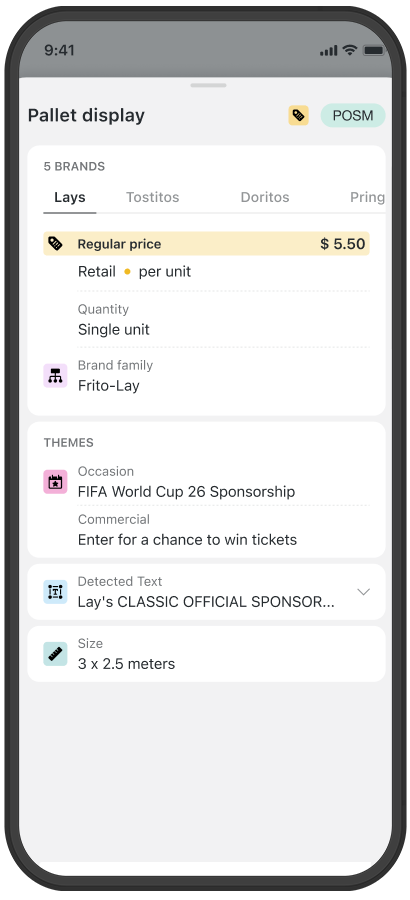
Verifying retail promotional execution has traditionally required separate audit steps: checking product inventory on the shelf, and verifying that promotional point-of-sale materials (POSM) are displayed correctly. In July 2026, FORM expanded its GoSpotCheck platform to detect both beverage packages and promotional signage within a single photograph.
The software uses zero-shot vision models to identify temporary cardboard shippers, endcap header boards, shelf-talkers, and digital marketing screens without requiring prior image training for each individual campaign asset. The platform extracts brand names, promoted products, listed prices, and campaign themes directly from field photos. For fast-turnaround activations, removing the need for pre-campaign training models allows territory teams to audit promotional compliance starting on day one.
Delivery Does Not Confirm Store Installation
Tracking promotional signage addresses a persistent leak in beverage trade marketing: shipping point-of-sale kits from a central warehouse does not guarantee they are installed in stores. Logistics provider PROWERB handles campaign distribution for Monster Energy in Europe, managing recurring campaign drops from a central logistics warehouse through tailored store kits. Similarly, PROWERB's work with Coca-Cola Europacific Partners coordinates thousands of point-of-sale assets, including glassware, sampling kiosks, and display fixtures.
In promotional procurement, marketing suppliers frequently report high performance—such as HH Global tracking a 98.45% on-time shipment rate for beverage campaigns in 2024. However, warehouse dispatch metrics stop at the store loading dock. Point-of-sale collateral frequently remains in store backrooms, meaning trade marketing investments fail to impact consumer purchasing.
When promotional materials sit unboxed in storage rooms, suppliers lose the critical visual interruption needed to drive impulse purchases. Bridging the gap between warehouse delivery and verified sales floor placement is essential for ensuring that expensive promotional collateral actually contributes to volume growth.
Checking Signs Against Promotion Dates
Extracting promotional signage data from store images introduces execution complexities. Under GS1 identification rules, time-critical promotional beverages often maintain identical consumer-level barcode (GTIN) data while updating only outer shipping packaging. A simple image scan can verify that a 12-pack of soda is on the display, but it cannot verify whether the price displayed on the shelf-talker reflects the current promotional circular or an expired campaign.
A single visit photograph provides commercial value only when the detected price, signage, and product assortment are reconciled against corporate contract dates. Connecting verified visual installation directly to authorized promotional schedules enables territory teams to correct non-compliant displays, update pricing errors, and protect margin allowances while the sales window remains active.
Deploying combined image recognition turns routine store audits into actionable marketing intelligence. Field representatives no longer need to complete separate checklists for product facings, promotional pricing, and signage placement. Capturing all three elements in a single image creates an audit trail that trade marketing teams can use to measure actual promotional compliance and resolve retailer execution gaps.
This unified audit approach fundamentally alters account management. When a distributor can demonstrate to a retail partner that a contracted endcap promotion was delayed by three days due to unplaced signage, the commercial conversation shifts from speculation to factual execution, ensuring trade marketing dollars yield verifiable sales lifts.