What the Checkout Cannot Tell You About a Beverage Cooler
By The Business Board
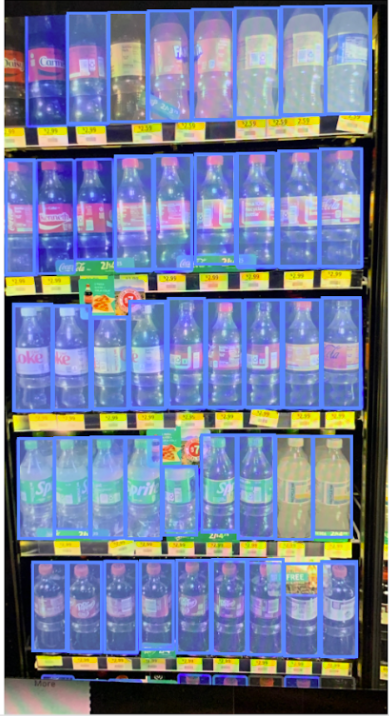
Point-of-sale register data records which beverage was purchased, but in retail stores with multiple cold touchpoints, register records do not identify which specific fixture supplied the bottle. That blind spot obscures display-level productivity across perimeter cold vaults, front-end checkout coolers, and secondary deli merchandisers.
A 2024 Brigham Young University study evaluated EdgeRec3D, a mobile 3D scanning system deployed across Mountain West convenience stores in 2022 to estimate display-level movement and optimize SKU allocation. By scanning cooler shelves before and after store service, the software inferred consumer purchases based on physical container displacement between service visits. Across the full 33-store experimental group, the system generated an estimated 7.83% sales increase, though the result carried a p-value of 0.222, leaving the primary treatment effect statistically inconclusive.
When Stores Follow the Recommendations
When the researchers isolated a subgroup of stores that implemented at least 80% of the software's recommended product changes, sales increased by an estimated 27.78%. However, because this cohort achieved an average compliance rate of 90.38% through non-random operational adherence, the study could not establish that compliance caused the larger volume lift.
The finding highlights an operational friction: algorithmic space recommendations fail when store personnel encounter inventory shortages, rigid vendor agreements, or insufficient time during scheduled service windows to re-tag cooler lanes. Furthermore, the system counted any removed bottle as a completed sale, creating measurement error whenever store staff moved stock between displays, processed customer returns, or handled damaged containers.
The practical value of display-level scanning lies in exposing how execution compliance dictates commercial performance. When store staff skip recommended resets, the algorithmic model cannot function as designed. Understanding the barriers that prevent frontline workers from executing planogram updates—whether stock access, lane dividers, or competing delivery deadlines—is just as important as the mathematical model optimizing the product facings.
Measuring Sales at Each Cooler
Macro-clustering strategies operate at a different layer of space planning. PepsiCo’s pepviz data platform grouped retail outlets by localized shopper profiles—segmenting stores into functional, health-focused, flavor-forward, and core carbonated soft drink footprints. In an unnamed national convenience chain, clustered stores generated 9.2% single-serve growth in 2023 compared to 6.4% in unclustered units.
Store-level clustering establishes the baseline product mix, but display-level placement dictates how volume converts inside the store. PepsiCo’s June 2026 cold-vault initiative, which paired 13-ounce PET single-serves alongside standard 20-ounce bottles to establish an entry-level price point, depends on display allocation. In-and-out single-serve items require dedicated checkout facings to capture grab-and-go trips, whereas larger multipacks occupy main vault shelves.
Display-level measurement determines whether an added package captures new margin or merely cannibalizes volume from an adjacent door. Without granular visibility into each cooler's movement, an account manager risks judging a product line on chainwide averages while misallocating space across individual store displays.
Resolving these placement trade-offs is where account profitability is determined. When an account representative can prove that a specific front-end barrel cooler generates high-margin impulse sales without eroding door vault volume, the retailer is far more likely to protect that secondary placement. Moving beyond blended store POS data allows distributors to manage cooler space with surgical precision.